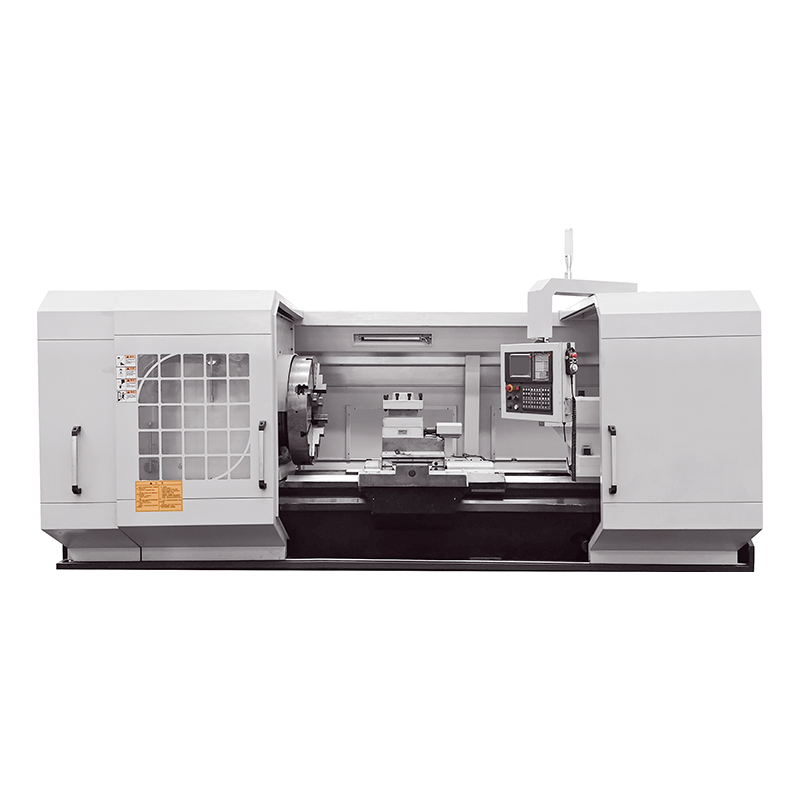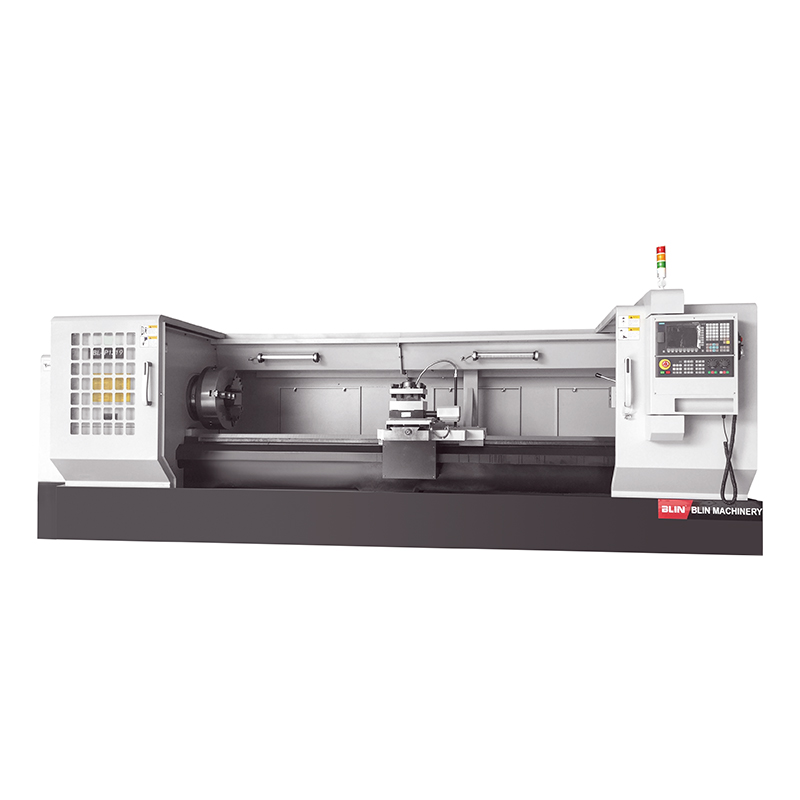




Pipe threading is a critical operation in industries ranging from oil and gas extraction to urban infrastructure and geological exploration. Every length of casing, tubing, or pressure pipe that must be joined securely depends on accurately cut threads to create a leak-proof, load-bearing connection. A CNC Pipe Threading Lathe is the specialized machine tool that makes this possible at industrial scale, combining the rigidity of a heavy-duty lathe with the precision of computer numerical control. This guide provides a comprehensive overview of how these machines work, their key components, thread standards, technical specifications, application scenarios, and the factors buyers should evaluate before making a purchasing decision. Whether you are a pipe manufacturer, a machine shop owner, or an engineering manager, understanding the capabilities and selection criteria of a CNC Pipe Threading Lathe is essential for making an informed investment.
Key Takeaways
A CNC Pipe Threading Lathe is a specialized CNC lathe with a large spindle bore and dual chucks, designed for cutting internal and external threads on pipe, casing, and tubing.
These machines can produce a wide range of thread standards including NPT, BSPT, API round and buttress threads, as well as metric and unified thread forms.
Model sizes range from compact machines handling 30 to 126 mm pipe diameters to heavy-duty models capable of threading pipes up to 270 mm in diameter.
Key differentiators include spindle bore size, spindle motor power and torque, bed width and rigidity, CNC controller brand, and tool post configuration.
Most CNC pipe threading lathes can also function as standard CNC lathes for general turning, making them versatile investments for job shops and manufacturers.
The global CNC machine tool market continues to grow steadily, driven by automation demand and precision manufacturing requirements across industries.
What Is a CNC Pipe Threading Lathe?
A CNC Pipe Threading Lathe is a specialized computer numerical control lathe purpose-built for cutting screw threads on the ends of pipes, tubes, and casing. Unlike a standard CNC lathe, which is designed primarily for general turning of shafts and disks, a pipe threading lathe is engineered to handle long, heavy, tubular workpieces that must pass through the spindle headstock. This requires a significantly larger spindle bore, a wider and more rigid bed, and dual chuck systems to support and stabilize the pipe during heavy threading cuts.
The fundamental advantage of a CNC Pipe Threading Lathe over manual threading methods or dedicated threading machines is its combination of precision, repeatability, and versatility. The CNC controller precisely coordinates spindle rotation with tool feed to produce accurate thread pitch, diameter, and taper on every piece. Once a program is set and verified, the machine can run batch after batch with consistent quality, reducing scrap rates and operator dependency. Additionally, most of these machines can perform general turning, facing, boring, and grooving operations in addition to threading, effectively serving as a heavy-duty CNC lathe for a wide range of workpieces. This dual capability makes a CNC Pipe Threading Lathe a cost-effective choice for facilities that need both dedicated pipe threading and general turning capacity.
The term "QK" in model designations (such as QK1313) follows the Chinese machine tool nomenclature system, where Q represents a pipe threading lathe category and K indicates CNC control. The numbers that follow indicate the machine's capacity class. For reference, the International Organization for Standardization (ISO) publishes internationally recognized standards for screw threads and machine tool terminology that provide the technical foundation for these machine classifications.
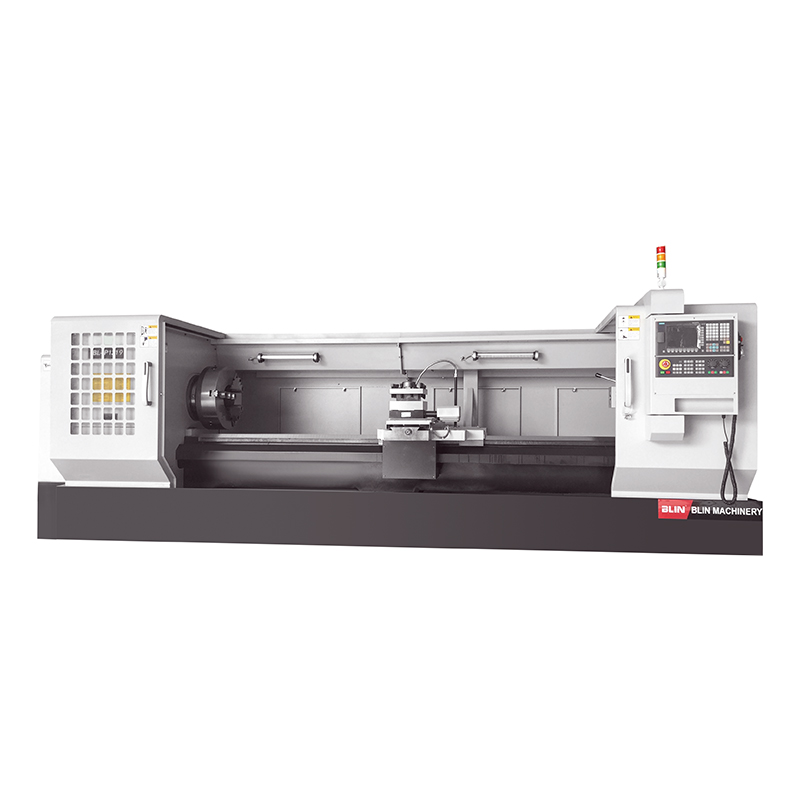
How a CNC Pipe Threading Lathe Works
Understanding the operating principle of a CNC Pipe Threading Lathe begins with the fundamental relationship between spindle rotation and tool movement. To cut a screw thread, the cutting tool must advance longitudinally along the workpiece at a precise rate relative to the spindle's rotation. Specifically, for every one full revolution of the spindle (and thus the workpiece), the tool must travel exactly one thread pitch (or lead, for multi-start threads) along the Z axis. This synchronized motion is the essence of thread cutting on any lathe, and the CNC controller executes it with high precision. A CNC Pipe Threading Lathe is specifically optimized for this synchronized motion on large, heavy tubular workpieces that would be difficult or impossible to process on a standard lathe.
In a typical threading operation on a CNC Pipe Threading Lathe, the process follows these general steps:
Workpiece Loading: The pipe or tube is inserted through the spindle bore and gripped by the front chuck (and rear chuck, for longer pieces). The dual chuck configuration provides stable support and prevents the pipe from flexing or vibrating during heavy cutting.
Program Setup: The operator selects or writes a CNC program that defines the thread parameters: pitch (or threads per inch), thread diameter, thread length, taper (for taper pipe threads), depth of cut per pass, and number of finishing passes. Modern controllers support dedicated threading cycles such as G92 (simple threading cycle) and G76 (compound threading cycle) that automate the calculation of cutting passes and infeed angles.
Tool Positioning: The threading tool is positioned at the start point, typically a small distance from the workpiece face. The tool's tip must be accurately centered at the workpiece centerline height to ensure correct thread profile geometry.
Roughing Passes: The spindle starts rotating at the programmed speed, and the CNC controller synchronizes the Z-axis feed with spindle rotation using signals from the spindle encoder. The tool takes successive cuts at increasing depths, removing material to form the thread profile. For taper threads (such as NPT or API), the X-axis also moves radially during the pass to create the taper.
Finishing Passes: After the thread depth is nearly achieved, one or more lighter finishing passes are taken at the final depth to improve surface finish and ensure accurate thread dimensions.
Tool Retraction and Repositioning: At the end of each threading pass, the tool retracts radially (X axis) and rapidly returns to the start position for the next pass. The entire sequence repeats automatically until the thread is complete.
Inspection and Unloading: The finished thread is inspected using thread gauges (ring gauges for external threads, plug gauges for internal threads) or optical comparators. The workpiece is then unloaded, and the next piece is loaded.
The critical technical element that makes CNC threading possible is the spindle encoder, which sends a pulse signal to the CNC controller at a precise angular position of the spindle (typically the zero or index position). The controller uses this signal to ensure that every threading pass starts at the same angular position, preventing "zigzag" or double-start threads. This synchronization is maintained across all passes, resulting in a clean, accurate thread form. On a CNC Pipe Threading Lathe, this encoder system must be particularly robust to handle the heavy cutting loads and long cycle times associated with large-diameter pipe threading.
Core Components of a CNC Pipe Threading Lathe
A CNC Pipe Threading Lathe consists of several integrated systems, each engineered to handle the specific demands of pipe threading. Understanding these components helps buyers evaluate machine quality and capability.
1. Bed and Guideways
The bed is the foundation of the machine, providing a rigid, stable base for all other components. Pipe threading lathes typically feature a wider bed than standard lathes (guideway widths of 550 to 600 mm are common) to accommodate larger workpieces and resist deflection under heavy cutting loads. The bed is cast from high-quality compound resin sand cast iron and undergoes aging treatment (natural or artificial) to relieve internal stresses, ensuring long-term dimensional stability and precision retention. The guideways are hardened by ultrasonic frequency induction hardening and then ground to precision. Many machines also feature PTFE (polytetrafluoroethylene) guideway strips on the carriage, which reduce friction, eliminate stick-slip (creeping), and improve wear resistance for smooth, accurate motion.
2. Headstock and Spindle Assembly
The headstock houses the spindle, which is the rotating axis that holds and drives the workpiece. The defining feature of a CNC Pipe Threading Lathe headstock is its large spindle bore, which allows long pipes to pass completely through the spindle. Spindle bore sizes range from 130 mm on compact models to 280 mm on heavy-duty models. The spindle is supported by precision bearings and is driven through a gear train, which provides high torque at low speeds — essential for heavy threading cuts in steel pipe. Most pipe threading lathes use a manual gear shift system with multiple speed ranges (typically 3 or 4 classes), with stepless speed variation within each range provided by a variable frequency drive (VFD) or servo motor. This combination gives the operator both high torque for heavy roughing and fine speed control for finishing. The gear-driven spindle design is a key differentiator of a CNC Pipe Threading Lathe compared to standard CNC lathes, which often use belt-driven or direct-drive spindles optimized for higher speeds rather than high torque.
3. Dual Chuck System
Unlike standard lathes that typically use a single chuck, a CNC Pipe Threading Lathe is equipped with dual manual chucks — one at the front of the spindle and one at the rear. This dual configuration serves two critical purposes: it provides stable, balanced support for long, heavy pipe workpieces, preventing sagging and vibration during cutting; and it allows the operator to feed the pipe through the spindle to the desired position, then clamp both chucks to lock it securely in place. The dual chuck system is one of the defining features that distinguishes a CNC Pipe Threading Lathe from a standard CNC lathe and is essential for achieving accurate, chatter-free threading on long pipe sections. Chuck sizes vary by model, with 3-jaw chucks (400 to 500 mm) common on smaller models and 4-jaw chucks (630 to 800 mm) on larger, heavy-duty machines. 4-jaw chucks offer better gripping force and concentricity adjustment for large, heavy pipes.
4. Carriage, Cross Slide, and Tool Post
The carriage moves longitudinally along the bed (Z axis), carrying the cross slide and tool post. The cross slide moves radially (X axis), controlling the cutting depth. Together, these two axes are driven by servo motors through precision ball screws, enabling accurate positioning and feed control. The tool post holds the cutting tools and can be a simple 4-station electric tool post (standard on many models) or an optional 6- or 8-station automatic turret for more complex multi-process work. A 4-station tool post is sufficient for basic threading and turning operations, while a multi-station turret allows automatic tool changing between different operations (turning, threading, grooving, boring) without manual intervention, increasing productivity for complex parts. Tool shank sizes are typically 32 x 32 mm, accommodating standard indexable insert tool holders for threading and turning.
5. Tailstock
The tailstock is mounted at the opposite end of the bed from the headstock and provides additional support for long workpieces. It features a quill (spindle) that can be extended to support the free end of the pipe or to hold a center for general turning operations. On pipe threading lathes, the tailstock quill typically has a travel of 250 mm, a diameter of 100 to 120 mm, and an MT5 or MT6 Morse taper for centers or drill chucks. The tailstock can be clamped at any position along the bed and is particularly useful when the machine is used as a general-purpose lathe for long shaft work.
6. CNC Control System
The CNC controller is the brain of the machine, interpreting the part program and coordinating all axis motions, spindle speed, and auxiliary functions. Standard controllers on Chinese-built pipe threading lathes often include domestic systems such as the GSK 980TC3, which offers reliable performance, good threading capability, and cost-effectiveness. Optional upgrades to internationally recognized controllers such as Siemens 808D ADVANCED or FANUC 0i-TF are commonly available for buyers who prefer familiar interfaces, global service support, or advanced features. The controller includes a display screen, keyboard or keypad for program input, manual pulse generator (MPG) for setup, and I/O interfaces for machine functions. Key threading-related features include support for G32 (single-point threading), G92 (threading cycle), and G76 (compound repeatable threading cycle), as well as constant surface speed (G96) and taper threading capability.
7. Feed and Rapid Traverse System
The X and Z axes are driven by AC servo motors coupled to precision ground ball screws. The servo motors provide high torque, fast response, and accurate positioning, while the ball screws convert rotary motion to linear motion with high efficiency and low backlash. Rapid traverse rates are typically 4 m/min on the X axis and 6 m/min on the Z axis, allowing quick repositioning between cuts and reducing non-cutting time. The feed rates for cutting are continuously variable within the controller's range, allowing the operator to optimize cutting parameters for different materials and operations.
Thread Standards and Types
One of the most important considerations when selecting a CNC Pipe Threading Lathe is its ability to produce the specific thread standards required by your industry and customers. Different regions and applications use different thread forms, and the machine's controller and tooling must support them. A well-configured CNC Pipe Threading Lathe should be capable of producing all major pipe thread standards through appropriate programming and tooling. The following are the most common pipe thread standards encountered in industrial manufacturing:
NPT (National Pipe Thread Tapered)
NPT is the American standard tapered pipe thread, defined by a 60-degree thread angle and a 1:16 taper (3/4 inch per foot). It is the most widely used pipe thread standard in North America for general-purpose pressure piping, including water, gas, steam, and hydraulic systems. NPT threads create a seal by the wedging action of the tapered male and female threads, often supplemented by thread sealant (pipe dope or Teflon tape). A CNC Pipe Threading Lathe must support taper threading cycles to produce NPT threads accurately, with the X axis moving radially during the threading pass to create the 1:16 taper.
BSPT / BSPP (British Standard Pipe Thread)
BSPT (British Standard Pipe Tapered) and BSPP (British Standard Pipe Parallel) are the British standard pipe threads, defined by a 55-degree thread angle. BSPT is a tapered thread (1:16 taper, same as NPT but with a different thread angle) used primarily in the United Kingdom, Europe, and many Commonwealth countries for pressure piping. BSPP is a parallel (straight) thread that relies on a washer or O-ring for sealing rather than thread interference, and is commonly used for fittings, valves, and hydraulic connections. These thread forms are widely encountered in export-oriented manufacturing, particularly for European and Asian markets.
API Threads (American Petroleum Institute)
API threads are specialized thread forms defined by the American Petroleum Institute for oilfield casing and tubing. The two primary types are API round thread (also known as 8-round thread, with a rounded crest and root) and API buttress thread (with a flat load flank and a steeper trailing flank, designed for high axial loads). Round threads are further classified as STC (Short Thread and Coupling), LTC (Long Thread and Coupling), and BTC (Buttress Thread and Coupling) based on thread length and profile. These threads are critical for oil and gas well construction, where casing and tubing must withstand high pressures, tensile loads, and corrosive environments. Producing API threads requires precise control of thread profile, taper, pitch, and standoff, making a high-precision CNC Pipe Threading Lathe essential for this application.
Metric and Unified Threads
In addition to specialized pipe threads, a CNC Pipe Threading Lathe can produce standard metric (M) and unified (UNC/UNF/UN) screw threads for general mechanical fastening. This capability makes the machine versatile for general turning and threading work beyond pipe manufacturing, increasing its utility in job shops and mixed-production environments.
| Thread Standard | Thread Angle | Type | Primary Region / Application | Sealing Method |
|---|---|---|---|---|
| NPT | 60° | Taper (1:16) | North America, general pressure piping | Thread interference + sealant |
| BSPT | 55° | Taper (1:16) | UK, Europe, Commonwealth | Thread interference + sealant |
| BSPP | 55° | Parallel (straight) | Europe, hydraulic fittings | Washer or O-ring |
| API Round (STC/LTC) | 60° (rounded) | Taper | Oilfield casing & tubing | Thread interference + coupling |
| API Buttress (BTC) | Modified | Taper | High-load oilfield casing | Thread interference + coupling |
| Metric (M) | 60° | Parallel | Global, general mechanical | N/A (fastener thread) |
| Unified (UNC/UNF) | 60° | Parallel | North America, general mechanical | N/A (fastener thread) |
Key Technical Specifications to Evaluate
When comparing CNC Pipe Threading Lathes, buyers should review the following core parameters to ensure the machine matches their production requirements. These specifications directly determine the machine's capacity, precision, and productivity.
| Specification | What It Means for Buyers | Typical Range (QK Series) |
|---|---|---|
| Spindle Bore | Determines maximum pipe diameter that can pass through the spindle | Φ130 – Φ280 mm |
| Pipe Threading Range | Range of pipe diameters the machine can thread | Φ30 – Φ270 mm |
| Max Swing Over Bed | Maximum workpiece diameter that can rotate over the bed | Φ630 – Φ800 mm |
| Center Distance | Maximum workpiece length between centers | 1,000 / 1,500 / 3,000 mm |
| Spindle Speed Range | Range of rotational speeds, with gear classes and stepless variation | 20 – 720 RPM (3–4 gear classes) |
| Spindle Motor Power | Determines cutting torque and heavy-duty capability | 11 – 15 kW |
| Max Loading Capacity | Maximum workpiece weight the machine can support | 3 – 4 tons |
| Guideway Width | Indicates bed rigidity and stability under load | 550 – 600 mm |
| X/Z Axis Rapid Rate | Speed of non-cutting repositioning, affects cycle time | 4 / 6 m/min |
| X Axis Travel | Maximum radial cutting depth capacity | 320 – 420 mm |
| Z Axis Travel | Maximum longitudinal cutting length | 850 / 1,350 / 2,850 mm |
| Tool Post Type | Number of tools and automatic change capability | 4-station electric (std); 6/8-station turret (opt.) |
| Tool Shank Size | Maximum tool holder cross-section | 32 × 32 mm |
| Chuck Size | Maximum workpiece gripping diameter | Φ400 (3-jaw) – Φ800 (4-jaw) |
| CNC Controller | Determines programming capability, threading cycles, and interface | GSK 980TC3 (std); Siemens 808D / FANUC 0i-TF (opt.) |
| Tailstock Quill Travel | Extension range of tailstock center | 250 mm |
| Machine Weight | Indicates overall rigidity and build quality | 4.5 – 7.7 tons (varies by size) |
Model Range and Capacity Comparison
CNC pipe threading lathes are available in a range of sizes to accommodate different pipe diameters and production requirements. The QK series, for example, spans from compact machines for small-to-medium pipes to heavy-duty models for large-diameter casing. The following comparison summarizes the key capacity parameters across the model range:
| Parameter | QK1313 | QK1319 | QK1322 | QK1325 | QK1327A |
|---|---|---|---|---|---|
| Spindle Bore (mm) | Φ130 | Φ200 | Φ225 | Φ255 | Φ280 |
| Threading Range (mm) | Φ30–126 | Φ50–193 | Φ50–220 | Φ50–250 | Φ50–270 |
| Max Swing Over Bed (mm) | Φ630 | Φ800 | Φ800 | Φ800 | Φ800 |
| Spindle Speed (RPM) | 30–720 | 20–550 | 20–550 | 20–420 | 20–420 |
| Spindle Motor (kW) | 11 | 15 | 15 | 15 | 15 |
| Chuck Type | 3-jaw Φ400 | 3-jaw Φ500 | 3-jaw Φ500 | 4-jaw Φ630 | 4-jaw Φ800 |
| Max Loading (tons) | 3 | 4 | 4 | 4 | 4 |
As the table shows, larger models trade maximum spindle speed for larger spindle bore and heavier load capacity. This reflects the physical reality that larger-diameter pipes require more torque at lower cutting speeds, while smaller pipes can be threaded at higher RPM for faster production. Buyers should select the model whose threading range and spindle bore comfortably cover their current and anticipated future pipe sizes, with some margin for flexibility. Consulting with the manufacturer's engineering team can help ensure you select the optimal CNC Pipe Threading Lathe model for your specific production requirements.
Application Scenarios
A CNC Pipe Threading Lathe serves a diverse range of industries and applications, all of which require accurate, repeatable threading on tubular workpieces. The following are the primary application areas:
Oil and Gas Industry: This is the largest and most demanding application for pipe threading lathes. The machines are used to thread oilfield casing and tubing according to API standards (round and buttress threads). Every joint of casing used in well construction must have accurately cut threads on both ends to ensure a leak-proof, structurally sound connection that can withstand downhole pressures, tensile loads, and corrosive fluids. High-volume pipe mills and threading facilities typically operate multiple CNC Pipe Threading Lathes in production lines, where each machine is dedicated to a specific pipe size or thread type for maximum efficiency.
Geological Exploration and Mining: Drill pipes used in geological exploration, mineral exploration, and water well drilling require threaded connections (often with tool joint connections) that must withstand high torque, axial load, and vibration during drilling operations. A CNC Pipe Threading Lathe is used to cut these precision threads on drill pipe sections and tool joints, ensuring reliable connections that can be made up and broken out repeatedly during drilling operations. The machine's high spindle torque and rigid construction are particularly important for threading the heavy-wall alloy steel pipe commonly used in drill string applications.
Urban Pipe Networks and Fluid Engineering: Municipal water supply, natural gas distribution, and industrial fluid transport systems rely on threaded pipe connections for valves, fittings, and pipeline sections. These applications typically use NPT or BSPT taper threads for general pressure piping. A CNC Pipe Threading Lathe provides the precision and repeatability needed for consistent thread quality across large production runs, ensuring leak-free connections in critical infrastructure.
Pressure Vessel and Boiler Manufacturing: Pressure vessels, boilers, and heat exchangers often require threaded nozzles, manways, and inspection openings. A pipe threading lathe can cut both external and internal threads on these components, ensuring compliance with pressure vessel codes and standards. The machine's ability to handle heavy, large-diameter workpieces makes it suitable for these applications.
General Machining and Job Shop Work: Beyond dedicated pipe threading, a CNC Pipe Threading Lathe functions as a heavy-duty general CNC lathe. Its wide bed, high spindle torque, and large swing capacity make it suitable for turning large shafts, bushings, flanges, and tubular components in architectural structures, heavy machinery, and general manufacturing. This versatility makes it a valuable asset for job shops that handle a mix of pipe threading and general turning work.
Market Context and Industry Trends
The global market for CNC machine tools continues to expand, driven by the ongoing trend toward manufacturing automation, precision engineering, and industrial upgrading. According to industry research, the global CNC machine tool market was valued at approximately 101.8 billion U.S. dollars in 2025 and is projected to grow at a compound annual growth rate (CAGR) of approximately 6.76 percent through 2035, reaching nearly 195.6 billion dollars. This growth is fueled by demand from automotive, aerospace, energy, and general manufacturing sectors, all of which require increasingly precise and efficient machining capabilities.
Within the broader machine tool market, lathes represent a significant segment, with CNC lathes accounting for a growing share as manufacturers replace manual and conventional machines with CNC-controlled equipment. In China, the world's largest machine tool producer and consumer, the lathe equipment market reached approximately 487 billion yuan in 2026, with the CNC (computer numerical control) rate rising to 72.1 percent, up from 62.3 percent in 2023. This trend toward CNC adoption is driven by labor cost increases, quality consistency requirements, and the need for integrated production data management in smart manufacturing environments. The CNC Pipe Threading Lathe, as a specialized subset of CNC lathes, benefits directly from this broader industry trend toward automation and precision.
For the pipe threading lathe segment specifically, demand is closely tied to activity in the oil and gas sector, infrastructure investment, and geological exploration. As global energy demand continues and new drilling projects are undertaken, the need for casing and tubing with accurately threaded connections remains strong. Additionally, infrastructure development in emerging economies drives demand for threaded pipe in water, gas, and sewage systems. Manufacturers and market researchers such as Smithers provide ongoing market intelligence on industrial machinery and manufacturing trends for those seeking detailed market analysis.
Buying Guide: How to Select the Right CNC Pipe Threading Lathe
For buyers researching a CNC Pipe Threading Lathe for sale or comparing CNC Pipe Threading Lathe prices, the following checklist provides a structured approach to the procurement decision. These criteria help ensure that the selected machine delivers reliable performance, accurate threading quality, and a strong return on investment:
Define your pipe size and thread requirements first: List the pipe diameters, wall thicknesses, and lengths you need to process, as well as the thread standards (NPT, BSPT, API, metric) required by your customers. This determines the minimum spindle bore, threading range, center distance, and controller capability you need. Select a machine with some capacity margin above your current largest pipe to accommodate future product expansion. Taking the time to accurately define these requirements at the outset will ensure you select a CNC Pipe Threading Lathe that fully meets your production needs without overpaying for unnecessary capacity.
Evaluate spindle power and torque: Pipe threading is a heavy cutting operation that requires high spindle torque, especially for large-diameter, thick-walled steel pipe. Ensure the spindle motor power (typically 11 to 15 kW) and gear reduction system provide sufficient torque at the cutting speeds you will use. A gear-driven spindle with multiple speed ranges is preferable to a direct-drive system for heavy threading work. This is one of the most critical specifications when evaluating a CNC Pipe Threading Lathe, as insufficient torque will result in slow cutting speeds, poor surface finish, and excessive tool wear.
Check bed construction and rigidity: The bed is the foundation of precision. Look for a wide bed (550 to 600 mm guideway width) cast from high-quality cast iron with aging treatment, hardened and ground guideways, and PTFE guideway strips on the carriage. A heavier, more rigid machine will maintain accuracy better under heavy cutting loads and over the long term. Machine weight is a useful indicator of build quality and rigidity. When comparing different CNC Pipe Threading Lathe models, pay close attention to bed width and overall machine weight, as these are strong predictors of long-term precision and durability.
Select the right CNC controller: The controller determines programming ease, threading cycle capability, and long-term service support. Domestic controllers (such as GSK) offer good value and are widely supported in many markets. International controllers (Siemens, FANUC) offer familiar interfaces, global service networks, and advanced features, but at a higher cost. Consider your operators' familiarity, local service availability, and required threading features when choosing.
Choose the appropriate tool post configuration: A 4-station electric tool post is sufficient for basic threading and simple turning operations and is the standard configuration on many models. If your production requires multiple operations (turning, threading, grooving, boring, chamfering) on each workpiece, consider upgrading to a 6- or 8-station automatic turret to reduce manual tool changes and increase productivity.
Verify dual chuck configuration and gripping capacity: Ensure the machine is equipped with dual chucks (front and rear) for stable support of long pipe workpieces. Check the chuck size and type (3-jaw vs. 4-jaw) to ensure it can grip your pipe diameters securely. 4-jaw chucks offer better gripping force and independent jaw adjustment for large, heavy, or out-of-round pipes.
Assess accuracy and precision specifications: Look for specifications on positioning accuracy, repeatability, and thread pitch accuracy. While these may not always be prominently listed, a reputable manufacturer should be able to provide them. The use of precision ball screws, servo motors, and hardened ground guideways are indicators of the machine's precision capability.
Evaluate after-sales support and warranty: Check the manufacturer's warranty policy (typically 12 months for major components), availability of spare parts, installation and commissioning support, operator training, and responsiveness of technical support. For international buyers, confirm that the manufacturer provides detailed documentation, video guidance, and optional on-site engineer dispatch. A machine is only as good as the support behind it.
Consider customization options: Every production facility is different. Look for a manufacturer that can customize center distance, spindle bore, controller, tool post, chuck type, and overall configuration to match your specific requirements. Off-the-shelf machines may not fully meet your production needs, and the ability to customize can significantly improve productivity and ease of integration.
Request a demonstration or trial cut: Before committing to a purchase, ask the manufacturer to perform a trial threading cut on a sample of your actual pipe material, using your required thread standard. This verifies that the machine can achieve the required thread quality, surface finish, and cycle time. A reputable manufacturer will welcome this request and use it to demonstrate their machine's capability.
Calculate total cost of ownership: Compare machines based on total cost over the expected service life (typically 10 to 15 years or more), including purchase price, shipping and installation, tooling and accessories, energy consumption, maintenance, spare parts, and expected downtime. A slightly more expensive machine with better rigidity, reliability, and support may have a lower total cost of ownership and higher productivity over its lifetime.
Looking for a Reliable CNC Pipe Threading Lathe Manufacturer?
BLIN Machinery specializes in CNC pipe threading lathes ranging from compact QK1313 models for small-to-medium pipes to heavy-duty QK1327A machines for large-diameter casing. Our machines feature wide rigid beds, gear-driven high-torque spindles, dual chucks, and a choice of GSK, Siemens, or FANUC controllers. With customizable configurations, comprehensive after-sales support, and a track record of serving oil and gas, geological, and industrial pipe manufacturers worldwide, BLIN is a partner you can rely on for precision pipe threading equipment.
Request a Quote TodayConclusion
A CNC Pipe Threading Lathe is a specialized, high-value machine tool that plays a critical role in industries where secure, leak-proof pipe connections are essential. From oilfield casing and geological drill pipe to municipal water networks and pressure vessels, these machines deliver the precision, repeatability, and heavy-duty cutting capability required for industrial-scale pipe threading. The key to selecting the right machine lies in carefully matching its specifications — spindle bore, threading range, spindle power, bed rigidity, controller, and tooling — to your specific production requirements, while also evaluating the manufacturer's support capabilities and the machine's long-term total cost of ownership.
As manufacturing continues to evolve toward greater automation and precision, and as global demand for energy infrastructure and industrial piping remains strong, the CNC Pipe Threading Lathe will remain an essential piece of equipment for pipe manufacturers, machine shops, and engineering companies worldwide. By approaching the buying decision systematically — defining requirements, evaluating technologies, verifying construction quality, and requesting trial cuts — buyers can select a CNC Pipe Threading Lathe that delivers accurate, consistent threading quality and reliable performance for many years of productive service.
Frequently Asked Questions
What is a CNC pipe threading lathe?
A CNC pipe threading lathe is a specialized computer numerical control lathe designed for cutting internal and external threads on pipe, tubing, and casing. It features a large spindle bore to accommodate long pipe workpieces, dual chucks for stable gripping, and CNC control for precise thread pitch and diameter control. It is widely used in oil and gas, geological drilling, and industrial pipe manufacturing.
What thread standards can a CNC pipe threading lathe produce?
A CNC pipe threading lathe can produce a wide range of thread standards including NPT (American National Standard Taper Pipe Thread, 60 degree), BSPT/BSPP (British Standard Pipe Thread, 55 degree), API round thread and buttress thread for oilfield casing and tubing, as well as metric and unified thread forms. The specific capability depends on the CNC controller and tooling configuration.
What size pipes can a CNC pipe threading lathe handle?
CNC pipe threading lathes are available in a range of sizes. Smaller models like the QK1313 handle pipe threading diameters from 30 to 126 mm with a 130 mm spindle bore. Larger models such as the QK1327A can handle threading diameters up to 270 mm with a 280 mm spindle bore. Center distances typically range from 1,000 to 3,000 mm depending on the model and configuration.
What is the difference between a CNC pipe threading lathe and a standard CNC lathe?
The main differences are: a larger spindle bore to pass long pipe workpieces through the headstock, dual chucks (front and rear) for stable gripping of long heavy pipes, a wider and heavier bed for rigidity under heavy cutting loads, a gear-driven spindle for high torque at low speeds, and specialized threading cycles optimized for pipe thread forms. Many pipe threading lathes can also function as standard CNC lathes for general turning work.
What should I consider when buying a CNC pipe threading lathe?
Key factors include: maximum pipe diameter and length you need to process, spindle bore size, thread standards required, spindle motor power and torque, CNC controller brand and capability, tool post configuration (4-station vs 6/8-station turret), bed width and construction quality, loading capacity, after-sales support and spare parts availability, and whether the manufacturer offers customization for your specific production requirements.
Can a CNC pipe threading lathe be used for general turning work?
Yes. Most CNC pipe threading lathes can function as standard CNC lathes for general turning, facing, boring, grooving, and drilling operations in addition to threading. Their wide rigid beds, high-torque spindles, and large swing capacity make them particularly suitable for heavy-duty turning of large shafts, bushings, flanges, and tubular components. This versatility makes them a valuable investment for job shops and manufacturers with mixed production requirements.
How much does a CNC pipe threading lathe cost?
Pricing varies significantly based on model size, spindle bore, center distance, CNC controller, tool post configuration, and optional features. Compact models with domestic controllers may be more budget-friendly, while larger heavy-duty models with premium international controllers (Siemens, FANUC) and extended center distances represent a higher investment. Buyers should request detailed quotes based on their specific configuration requirements and evaluate total cost of ownership rather than purchase price alone.