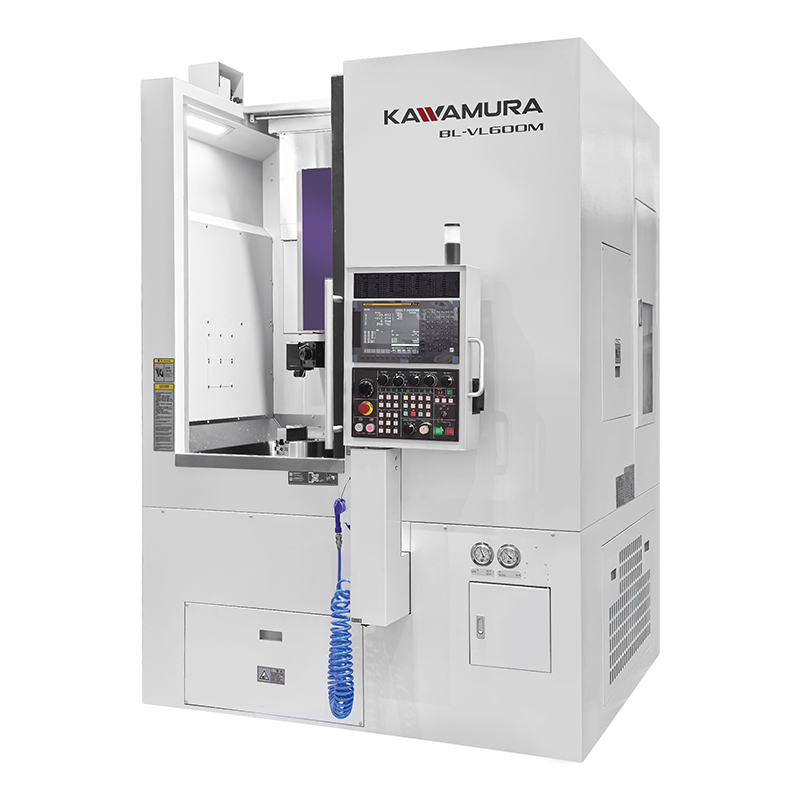




Advantages and Disadvantages of Vertical CNC Lathes
Vertical turning machines with CNC control have become standard equipment in factories that machine wheels, brake discs, flanges, bearing rings, and large gear blanks. Their spindle stands upright and the workholding table faces up, which changes how workpieces are held, loaded, and cut. This article explains the advantages and disadvantages of vertical turning machines in plain terms, compares them with horizontal machines, and shows which parts they handle best.
Key Takeaways
Vertical CNC lathes use gravity to hold heavy workpieces on a horizontal table, which improves stability and makes loading easier.
They offer high rigidity for heavy cuts, compact floor space, and good chip control, especially for large, short, disk-shaped parts.
The main limitations are geometry: parts must be short relative to their diameter, and long shafts or deep bores are better left to horizontal machines.
Buyers should match table size, load capacity, spindle torque, and acceptance standards such as ISO 13041 to their actual workpiece before purchasing.
How a Vertical CNC Lathe Works
A vertical CNC lathe is a turning machine whose spindle axis is vertical. The workpiece is clamped on a chuck or faceplate mounted on a horizontal table, and the cutting tool is carried by a cross slide and a vertical slide above it. Because the table faces up, the weight of the workpiece presses it into the workholding system instead of hanging from it, which is why heavy and large-diameter parts are natural candidates for this design. The machine removes material in the same way as any lathe, but the vertical layout changes the practical strengths and limits of the machine in important ways.
The structure follows a consistent pattern across the size range. A cast base carries the rotary table, a column rises at the rear, and a ram or slide moves vertically with a cross slide on top. Large models add a beam and extra guides, so the column structure is symmetric and highly damped. The spindle may use a direct drive, a multi-speed gear train for torque, or a two-stage reduction gearbox on the biggest machines, and the choice between these drives is one of the first things a buyer should understand, because it decides the balance between high-speed finishing and low-speed heavy roughing.
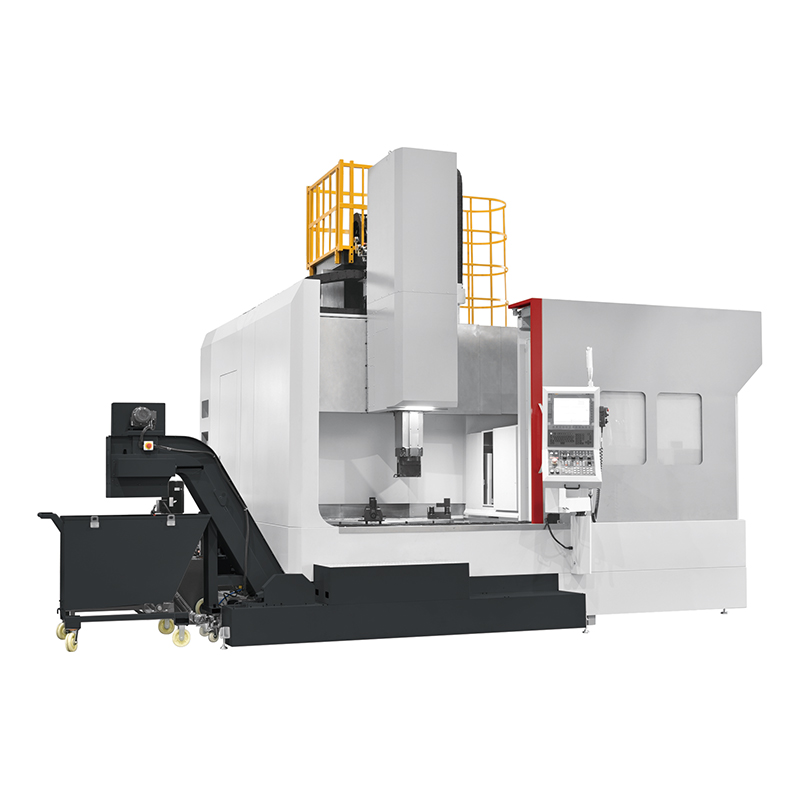
The Advantages of Vertical CNC Lathes
Gravity-assisted workholding. The weight of the workpiece works with the clamping system rather than against it. A heavy casting or forging sits on the table under its own weight, so it is stable during clamping and remains stable during cutting. This is the single biggest reason large disk-shaped parts are machined vertically.
High rigidity for heavy cuts. The column and cross slide sit directly above the table, and the cutting forces are directed into a compact, closed structural loop. Machines built on box guideways and alloy steel rams absorb deep cuts and interrupted cuts without chatter, which allows high material removal rates on hardened or rough forgings.
Easy loading and unloading. The upward-facing table means parts can be placed with a crane, a hoist, or even a cart on smaller models. There is no need to thread a long shaft through a spindle bore, and the operator can see and check the clamping position from above, which shortens setup time on heavy jobs.
Compact floor space. For a given turning diameter, a vertical machine is usually shorter in length than a horizontal lathe with the same swing, because the workpiece diameter grows upward instead of outward. Shops can fit a large turning capacity into a smaller footprint, which matters when floor space is expensive.
Good chip and coolant control. Chips fall from the cutting zone by gravity, so they do not wrap around the workpiece or the tool as easily as on horizontal machines. Wide chip conveyors and side water-air flush systems keep the cutting area clear during long production runs.
Single-setup versatility with live tooling. On machining-center-style models, the turret can carry powered tools and the table can index as a C axis, so turning, milling, drilling, and tapping are completed in one clamping. This removes the errors and handling time of moving a heavy part between machines. On compact models the powered turret is a BMT unit with speeds up to 4,000 rpm, while heavy-duty models use a BT50 live spindle with automatic tool changers, which brings milling-center capability to very large parts.
| Advantage | What It Means in Practice |
|---|---|
| Gravity-assisted workholding | Heavy parts sit stable on the table; clamping is secure |
| High rigidity | Box guideways and closed structure allow deep, stable cuts |
| Easy loading | Crane or hoist placement from above; visible clamping |
| Compact footprint | Large turning capacity in less floor space |
| Chip control | Chips fall away from the cutting zone by gravity |
| Live-tool capability | Turning, milling, and drilling in one setup |
The Disadvantages of Vertical CNC Lathes
Limited workpiece geometry. Vertical machines are designed for parts that are short relative to their diameter. Long shafts, slender spindles, and deep bores exceed the practical turning height and invite deflection, so those parts belong on a horizontal lathe. The height limit is a hard constraint, not a matter of programming.
Higher initial investment for a given spindle size. The structure needed to hold a large table rigid, the bearings, and the drive system make a vertical machine more expensive than a horizontal lathe of similar spindle capacity. Shops that only turn small shafts rarely justify the extra cost.
Overhead handling requirements. Because the working zone is above the table, the shop needs a crane or hoist with enough reach and height, and the machine itself needs enough headroom. A factory without overhead lifting capacity may face additional building investment.
Chip management still requires design care. Chips fall by gravity, but on large machines they accumulate around the table base, so a properly sized chip conveyor and coolant system are essential. Under-sized chip handling is one of the most common complaints from vertical machine users.
Less efficient for small parts. Machining small components on a large vertical machine wastes table capacity, spindle power, and floor space. Small disk parts belong on small machines; oversized worktables are not an advantage for miniature workpieces.
There is also an operational side. Programming and setup differ from horizontal practice, because tool approach directions and fixture references change, so shops usually need to retrain or hire operators familiar with vertical geometry. Regular maintenance is heavier as well: large tables, hydraulic chucks, and gearboxes require disciplined lubrication and inspection schedules, and a failed table bearing on a large machine is a costly, slow repair. None of these points makes the vertical layout wrong; they simply belong in the total cost calculation.
| Limitation | How It Affects Production |
|---|---|
| Geometry limits | Short parts only; long shafts and deep bores deflect |
| Initial cost | More expensive than a horizontal lathe of similar spindle size |
| Overhead handling | Needs crane access and building headroom |
| Chip management | Heavy swarf must be handled by a matched conveyor system |
| Small-part efficiency | Large tables waste capacity on small workpieces |
Vertical CNC Lathes vs. Horizontal CNC Lathes
The choice between the two layouts comes down to the part family. The industry as a whole is documented by associations such as the Association for Manufacturing Technology in the United States and the German Machine Tool Builders' Association, which publish machine tool market and technology data that help buyers compare machine types on an equal basis.
| Aspect | Vertical CNC Lathes | Horizontal CNC Lathes |
|---|---|---|
| Best workpiece shape | Short, large-diameter disks and rings | Long shafts, spindles, and deep bores |
| Workholding | Gravity holds part on upward-facing table | Part hangs from chuck or between centers |
| Loading | Easy crane or hoist access from above | Usually requires through-spindle or tailstock handling |
| Rigidity for heavy cuts | Excellent on large-diameter work | Good on slender, small-diameter work |
| Floor space | Compact for the turning diameter | Longer footprint for the same swing |
| Chip control | Gravity-assisted removal | Requires chip augers and conveyors |
| Typical cost | Higher per spindle size | Lower for equivalent spindle size |
Which Parts Are Best Suited
Vertical machines excel at parts whose diameter is large compared with their height. Brake discs, wheel hubs, flywheels, clutch pressure plates, bearing rings, gear blanks, motor housings, and large flanges are the classic examples. In the new-energy vehicle sector, motor housings and reducer gear blanks are routinely turned on vertical machines because of their short, heavy, and precise nature. Heavy-duty models extend the same logic to massive workpieces: table load capacities reach 15,000 kg, and spindle torque on the largest machines can exceed 48,000 Nm, which is what roughing hardened materials at large diameters demands.
On heavy-duty machines the details are built for exactly this workload. A two-stage reduction gearbox multiplies torque at low speed, wide box guideways and an alloy steel square ram carry the cutting forces, and cross-roller bearings keep the table rotating accurately under loads above ten tons. The result is a machine that can take deep interrupted cuts on castings and forgings while holding the roundness and cylindricity that gear blanks and bearing rings require.
The same geometry rule works in reverse. If a component is long, slender, or needs a deep internal bore, a horizontal lathe is the better match. Trying to machine such parts on a vertical machine means accepting deflection, slow speeds, or both.
What to Check Before Buying
Buyers should define the workpiece before comparing machines. Table or chuck diameter must cover the largest part, and the recommended turning diameter should sit comfortably inside the machine capacity. Load capacity matters just as much: compact vertical models in this class handle 300–600 kg, while heavy-duty models take up to 15,000 kg, and undersizing either number leads to premature wear.
Spindle speed and torque decide whether the machine can rough and finish efficiently. Compact models offer speeds up to about 3,000 rpm for aluminum and finishing work, while heavy-duty machines trade speed for massive torque through multi-speed gear drives. On the precision side, positioning and repeatability figures such as 0.008/0.010 mm on compact models and 0.015/0.020 mm on heavy-duty models, with repeatability of 0.004/0.005 mm and 0.010/0.015 mm respectively, give a fair comparison between suppliers.
Verification standards remove guesswork. ISO 13041-2, the international standard for geometric tests of turning machines with a vertical workholding spindle, defines how geometry is measured, and ISO 13041-6, the standard for the accuracy of a finished test piece, defines how cutting accuracy is verified. Many builders also state acceptance to VDI 3441. Asking which standard the machine is tested to, and requesting the test report, is the fastest way to compare two quotes honestly.
| Specification | Compact Model (VL400) | Heavy-Duty Model (VL2000H) |
|---|---|---|
| Max. turning diameter | 450 mm | 2,000–2,500 mm class |
| Table load capacity | 300 kg | 15,000 kg |
| Spindle speed / drive | 3,000 rpm, direct or gear drive | Two-stage gearbox, torque over 48,000 Nm |
| Guideway type | Linear or box guideway | Wide box guideway and square ram |
| X/Z positioning accuracy | 0.008/0.010 mm | 0.015/0.020 mm |
| X/Z repeatability | 0.004/0.005 mm | 0.010/0.015 mm |
| Turret / ATC | 12-station hydraulic-servo or BMT powered turret | 12- or 16-station BT50 automatic tool changer |
| Typical parts | Brake discs, hubs, bearing rings | Large flanges, gear blanks, motor housings |
Finally, compare the full package, not only the base price. Delivery time, spare parts stock, control system support, and the warranty terms differ between builders, and on a machine that will run for a decade, service access matters more than a small price difference. A builder that provides machining tests on the buyer's own workpiece before shipment is a strong signal of confidence, because it proves the geometry, torque, and control are matched to the actual job.
Safety Considerations
Vertical machines handle heavy parts, and the hazards are the same ones regulators emphasize for all machine tools. the U.S. workplace safety guidance on machine guarding lists the safeguarding principles for rotating equipment: interlocked doors, emergency stops, and proper training for operators and crane crews. Loading with a hoist or crane deserves particular attention, because a swinging load over an open table is where most serious incidents occur.
Conclusion
The advantages and disadvantages of vertical CNC lathes are two sides of the same geometry. The vertical layout earns its place wherever parts are heavy, short, and large in diameter: it holds them stable with gravity, cuts them with rigidity, loads them easily from above, and fits large turning capacity into a small footprint. The same layout becomes a weakness for long shafts and deep bores, and the initial cost is higher than a horizontal machine of similar spindle size. For shops that turn wheels, rings, flanges, and housings in volume, the trade is almost always worth making; for shops that live on shafts, it is not. Define the part family, check the load and torque numbers, and verify the acceptance standard before ordering.
Frequently Asked Questions
What are the main advantages of vertical CNC lathes?
Gravity-assisted workholding, high rigidity for heavy cuts, easy overhead loading, compact floor space, and good chip control make them ideal for heavy, large-diameter, short parts.
What are the disadvantages of vertical CNC lathes?
The main limits are workpiece geometry, since parts must be short relative to their diameter, plus higher initial cost, the need for overhead handling equipment, and lower efficiency when machining small parts on a large table.
What is the difference between vertical and horizontal CNC lathes?
A vertical machine holds the part on an upward-facing table with a vertical spindle, while a horizontal machine holds it along a horizontal axis. Vertical machines suit short, heavy, large-diameter parts; horizontal machines suit shafts and deep bores.
What parts are best machined on a vertical CNC lathe?
Brake discs, wheel hubs, flywheels, bearing rings, gear blanks, motor housings, flanges, and similar disk-shaped components that are short compared with their diameter.
Can a vertical CNC lathe machine long shafts?
Generally no. Long, slender workpieces exceed the turning height and deflect under cutting force, so they are better machined on a horizontal lathe.
How much weight can a vertical CNC lathe handle?
It depends on the model. Compact machines handle a few hundred kilograms, while heavy-duty models reach table load capacities of 15,000 kg.
Are vertical CNC lathes more expensive than horizontal ones?
For a similar spindle size, usually yes, because of the larger table structure and drive system. The higher cost is justified when heavy, large-diameter workpieces are the core workload.
Looking for a Reliable Vertical CNC Lathes Manufacturer?
BLIN Machinery supplies vertical CNC lathe series from BL-VL400 to BL-VL2500H, covering table diameters of 400–2500 mm, load capacities up to 15,000 kg, FANUC or SIEMENS controls, optional live-tool turrets and automatic tool changers, with acceptance tested to VDI 3441 and ISO 13041. Buyers can request the full specification sheet, machining videos, and a quotation for their specific workpiece.