




The difference between CNC lathe and ordinary lathe
A conventional lathe and a CNC lathe can produce many of the same turned parts, yet they are very different machines underneath. On one, every movement is decided by the operator's hands, eyes, and experience. On the other, the movements are decided by a computer program that repeats the same path exactly, part after part. This guide explains the real differences between the two — how they are controlled, how accurate they can be, how productive they are, and what they cost — in plain language that shop owners and buyers can act on.
Key Takeaways
The core difference between a CNC lathe and an ordinary lathe is how movement is controlled: manually by the operator on a conventional machine, automatically by a stored program.
Its accuracy comes from ball screw drives, encoder feedback, and program control, while an ordinary lathe depends on gear and leadscrew transmission plus the operator's skill.
In batch production, one operator can typically run two or more CNC machines at once, and the commonly reported productivity gain over a conventional lathe is more than four times.
The purchase price of a comparable CNC lathe is usually about 1.5 times that of an ordinary lathe, but the cost per part falls as batch size and repeat orders grow.
An ordinary lathe is often faster to set up for simple one-off jobs; the automated machine earns its value through repeatability, complex contours, and high-volume production.
What Is the Difference Between a CNC Lathe and an Ordinary Lathe?
Both machines remove material from a rotating workpiece using a cutting tool, and both can turn, face, bore, thread, and part off. The difference is not in the cutting principle but in who — or what — controls the tool path. An ordinary lathe (also called a conventional or manual lathe) requires the operator to move the tool by hand wheels and levers and to read measurements manually. A CNC lathe follows instructions stored in a computer program: servo motors drive the axes, a controller interprets the program, and the machine reproduces the same tool path automatically.
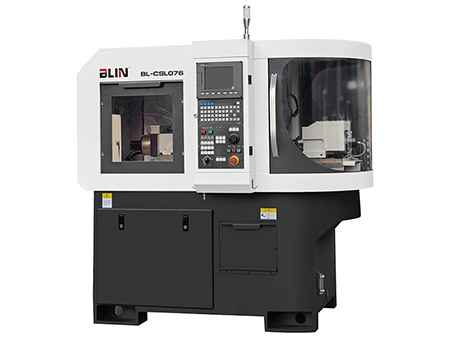
How Each Machine Is Controlled
On an ordinary lathe, the spindle speed, feed rate, and tool position are all set by hand. The operator watches the cut, listens to the machine, and adjusts as they work. Quality therefore depends heavily on experience and attention. On a CNC machine, the part geometry is defined in a program — typically generated in CAM software or written directly — and the control system moves the tool along the programmed path. Computer numerical control is the technology that lets a machine tool run from direct input of data, and it is the same principle used across modern automated manufacturing. Most CNC turning machines are programmed in G-code, a standard language that tells the machine how to move, and modern controls also accept CAM-generated programs directly. The operator's main tasks become loading and unloading workpieces, checking the first piece, and monitoring the run.
Accuracy and Repeatability
This is where the two machines differ most clearly. An ordinary lathe transmits motion through gears and a leadscrew, and backlash in these mechanical parts — the small amount of play between mating surfaces — introduces positioning error. Measurement is also manual: the operator stops the machine, measures the part with a caliper or micrometer, and corrects the next pass by judgment. The result is that repeat accuracy depends on the person at the machine.
A CNC lathe drives its axes with ball screws and servo motors. The ball screw is pre-tensioned during installation to remove transmission clearance, and an encoder on the motor or screw reports the actual position back to the controller in a closed loop. The program defines where the tool must go, and the controller corrects any deviation automatically, including compensation for tool wear. Positioning accuracy and repeatability of numerically controlled axes are formally tested according to the ISO 230 test code for machine tools, so the stated accuracy is a measured, standardized figure rather than a subjective one. In practice, high-precision CNC machines hold repeat positioning accuracy in the order of a few micrometres — a level that manual operation cannot maintain part after part.
Productivity in Batch Production
In single-piece work, the speed advantage of a CNC machine is modest, because time is spent programming and setting up. In batch production the picture changes completely. The machine with a hydraulic chuck or collet clamps the workpiece automatically, cutting tools are stored in a turret or gang tool post and indexed by program, and the machine runs unattended between cycles. With an automatic bar feeder, the machine can even run continuously while the operator prepares the next job. One operator can supervise two or more machines at the same time, loading and unloading while the machines cut. In such conditions, output per operator is commonly reported as more than four times that of a conventional lathe operated by one skilled machinist.
Quality Consistency and Pass Rate
On an ordinary lathe, human factors directly affect quality. Fatigue, distraction, or a change of operator can shift dimensions from part to part, and the rejection rate rises sharply in long runs. On a CNC machine, the basic accuracy is fixed by the machine and the program; the operator mainly handles loading, unloading, and inspection, and the first piece is checked carefully before the batch runs. Because the same program produces the same tool path every cycle, the qualified rate stays high and stable across a batch — provided the machine is properly maintained and the workpiece is clamped consistently.
Labor Requirements and Skill Level
An ordinary lathe needs a skilled operator: someone who understands cutting parameters, can read and correct measurements, and has years of feel for the machine. Skilled manual operators are often the most expensive workers in a small shop and the hardest to replace. A CNC machine shifts the skill requirement. The person who programs the machine and sets up tooling still needs technical training, but the daily operation — loading parts and pressing start — requires far less manual skill, which is why one worker can look after several machines. Shops that already employ experienced manual machinists usually find that many of their skills transfer to CNC work after programming training.
Cost Comparison
The clearest disadvantage of a CNC machine is the higher entry cost. For the same turning capacity, it typically costs about 1.5 times as much as an ordinary lathe. On top of the machine price, buyers should budget for programming software or training, a spare-tool inventory, and more complex maintenance. However, the cost per finished part tells a different story: in batch production the machine spreads its higher fixed cost across many parts, and its labor cost per part is much lower. As the price of CNC systems continues to fall, the cost gap between the two machine types keeps narrowing.
| Cost Factor | Ordinary Lathe | CNC Machine |
|---|---|---|
| Purchase price (same capacity) | Baseline | Typically about 1.5× higher |
| Setup and programming time | Short for simple jobs | Longer before the first piece |
| Labor cost per part | One skilled operator per machine | Lower; one operator can run multiple machines |
| Cost per part at low volume | Lower | Higher |
| Cost per part at high volume | Higher | Lower |
| Maintenance and training | Simple, low cost | More complex, higher cost |
Which Machine Should a Workshop Choose?
There is no single correct answer, because the right choice depends on the work. For simple one-off parts, repairs, or very small batches, an ordinary lathe is often the economical option: no programming is needed, setup is fast, and a skilled operator can turn a part in minutes. For repeat orders, tight tolerances, complex contours, or high volumes, a CNC machine is usually the better investment, because it protects quality and multiplies output. Many workshops keep both machine types side by side — the conventional lathe for quick and simple jobs, the CNC machine for production work — and let each do what it does best.
CNC Lathe vs Ordinary Lathe: Side-by-Side Comparison
| Dimension | Ordinary Lathe | CNC Lathe |
|---|---|---|
| Control | Manual hand wheels and levers | Programmed tool path with servo drives |
| Accuracy driver | Operator skill; gear and leadscrew transmission | Ball screws, encoder feedback, program control |
| Repeatability | Varies with operator and fatigue | Consistent; tested per ISO 230 series |
| Measurement | Manual, with machine stopped | Automatic feedback; in-process compensation |
| Batch productivity | One skilled operator per machine | One operator can run two or more machines |
| Quality consistency | Strongly affected by human factors | Stable pass rate across the batch |
| Skill needed to operate | High manual skill | Programming skill; lower manual skill |
| Purchase price | Lower | Typically about 1.5× higher |
| Best suited for | Simple jobs, repairs, small batches | Repeat orders, tight tolerances, high volume |
Conclusion
The real difference between a CNC lathe and an ordinary lathe is not the metal-cutting principle — it is control. An ordinary lathe turns the operator's hands into the control system, which makes it flexible, quick to set up, and entirely dependent on skill. The CNC machine replaces manual control with a program and feedback, which makes it repeatable, accurate, and highly productive in batches. Buyers should compare the two machines not just by price but by the work they will actually run: simple and varied jobs favor the conventional lathe, while precision, consistency, and volume favor the CNC machine.
Frequently Asked Questions
In terms of repeatability, yes. The machine controls tool position through ball screws and encoder feedback, so it holds the same dimension part after part. The accuracy of any machine also depends on its quality, setup, and maintenance.
Yes. The machining knowledge — cutting tools, speeds, feeds, workholding — carries over directly. What is new is programming and operating the control system, which can be learned through training, usually within a few weeks to months.
Not always. For simple one-off parts, an ordinary lathe is often faster and cheaper because there is no programming or setup time. The advantage grows with batch size, repeat orders, and complex geometry.
For the same turning capacity, the purchase price is commonly about 1.5 times that of an ordinary lathe. Buyers should also consider programming, training, tooling, and maintenance in the total cost.
Not in every workshop. Many shops keep both: the ordinary lathe handles quick, simple, or one-off jobs, while the CNC machine runs production batches. Each machine type is best at what it is designed to do.
Check spindle power and speed, positioning accuracy and repeatability (ideally tested per the ISO 230 series), turret or tool capacity, the control system, and the supplier's service and spare parts support.
Looking for a Reliable CNC Lathe Manufacturer?
BLIN Machinery (Ningbo BLIN Machinery Co., Ltd.) has designed and built CNC turning machines since 2007 and exports to 78 countries. Its product range covers Swiss-type, slant-bed, flat-bed, pipe-threading, and vertical CNC turning machines, with factory-direct quotation, customization, and after-sales support. Buyers can request a detailed quote or discuss their turning application directly with the manufacturer.
Get a Free Quote from BLINView BLIN CNC Lathe Products →